
Born in Boston in 1952 and raised mostly in peacetime New York City, it’s hard to imagine that the building of the Berlin Wall in 1961, or a military coup in Greece in 1967, or Mao’s communist takeover of China in 1949, would alter the course of my life. But they did and still do. Not a day goes by without my thinking about how much I owe to those events, and to the three men who personally introduced me to them.
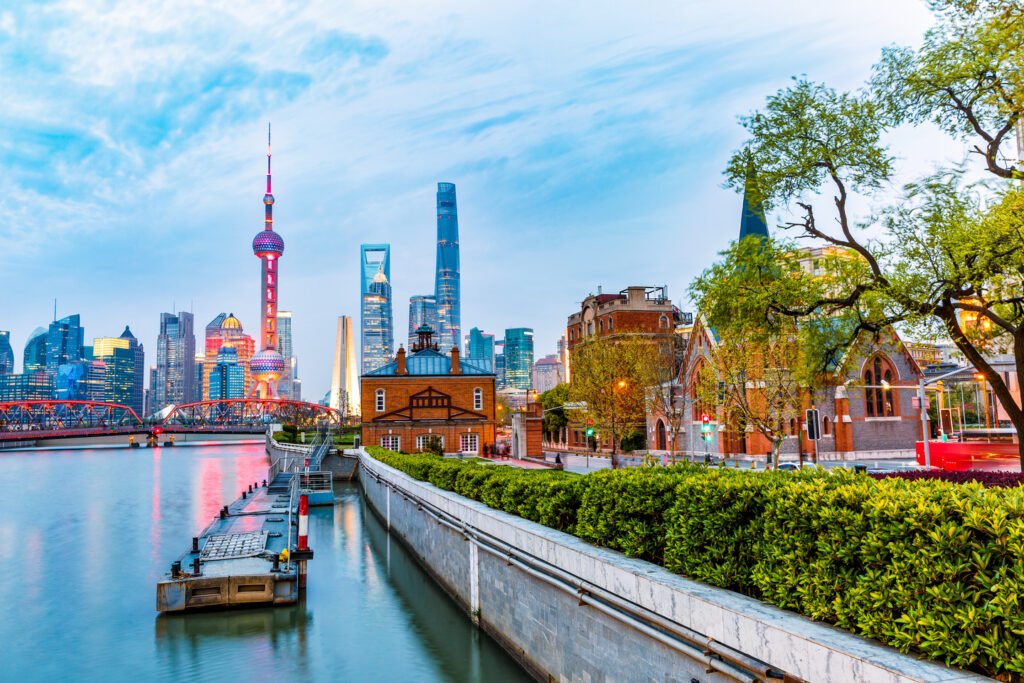
I wasn’t alive in 1949. But wars launch and sink many ships and people, with endless ripples. Mao’s Communist revolution launched Shen Ho Fong, whose Catholic name was John, then a mildly prospering doctor of traditional Chinese medicine and supporter of Chinese nationalist leader Chiang Kai Shek. It literally launched Dr. Shen, forcing him to flee Shanghai in 1949 or be lynched at the hands of Mao’s army for having given financial support and loyalty to the Nationalists. He fled to Malaysia, then Vietnam and then Taiwan before coming to the US in 1971. I met him in 1978 when, as the second licensed acupuncturist in the State of New York, he was building his acupuncture and Chinese medicine practice, treating mostly western patients including a coterie of actors and musicians. His office was the living room of his apartment in Chinatown, divided by a gossamer curtain into a waiting area and consultation room, with only a fleeting hint of privacy that was breached as soon as any consultation started. While you could not see the consultation, everyone in the waiting room could see who went in then hear the most intimate details of what was said. Most consultations had a common pattern, and often included a dose of Chinese philosophy.
“Open mouth, show tongue, look me eyes – this while Dr. Shen’s first three fingers assessed the 33 different pulses he could feel in your wrist, resting on a small pillow on his desk. After a few minutes of this examination, he would write some Chinese notes in your chart before speaking: “Third pulse weak and slippery; fourth pulse hot and fast. You have fright as child, maybe at six or seven: Make kidney weak. And now have too much sexy. Must not have so much sexy. No good for “chi”, the body’s life force. Need to rest more, balance life. Have special herb for you. Very good. And needles, very good.” Most of the time he did not ask the patient what was wrong – he would check tongue, eyes and pulse and then tell the patient what was wrong and prescribe a mixture of Chinese herbs and acupuncture.
When patients emerged from their private consultations, I enjoyed seeing how they dealt with the fact that nothing was private. Typically their expressions vacillated between embarrassment at Dr. Shen’s public advice – eyes down or glancing around the room without making eye contact — or stone-faced pretense that no one had heard a thing. But it was great for those in the waiting room, who could absorb an hour’s worth of Chinese wisdom before their own diagnosis and treatment. And good for me, as I sorted his mail and reviewed important documents for him. At the end of each afternoon I would drive Dr. Shen home to Connecticut. We would discuss his various legal and financial issues and he would share more of his philosophy. From the moment I met him, I could tell he was a very special man, and that I would benefit more by being around him than by payment of any fee I might charge for my legal services.
Dr. Shen lived the way he spoke, teaching by example as well as words. He was wise and generous. He would charge the people who could pay, and treat for free those who could not. He earned a lot and gave a lot, and seemed to enjoy every moment. His home was always open to family and friends, and even to strangers in need. Dinner almost always included five to ten people sharing homemade Chinese food and lively conversation in several languages. He never let any issue rattle him. Even when the Japanese invaded Hong Kong in World War II he told of walking the streets to see his patients, without running from bullets or bombs, because it he knew it was not yet his time. That story was believable, because of how he lived and behaved and his deep belief in “fate.” He treated everyone with grace and respect, and shared his simple and profound views with all his patients and friends. “If your life is full of small problems, be happy. That is normal life. If you have no problems, be careful, because you have big problem you don’t know about, that will surprise you.” He never disdained western medicine but often explained its difference from Chinese medicine with this: “Western medicine very good to treat symptoms. Chinese medicine treat cause.” From the way he said it, and the insights he had into each patient’s issues, you knew which he thought was more in harmony with life and its problems.
Over nearly thirty years I never charged him a dime, nor he me, and we both benefited from each other’s advice, ideas and friendship. The bit of wisdom I remember most is this: “Be happy. Life complex. Full of good and bad. Be careful of emotions. Try to balance life. If in life you have one good friend, or one moment of pure happiness, then your life is a success.” By that measure my life has been far more successful than I could have hoped. And while I am still type A and want to accomplish more than I have, I am also content and blessed with friends and lessons beyond any expectation I had as a child or young adult.
I was alive in 1961 but far from Berlin when the Wall went up, and when Jack Kennedy visited it in 1963. He spoke just a few feet from a place in the Wall where a few days before an East Berliner was shot trying to escape, his bullet riddled body left to bleed to death in the barbed wire. “Two thousand years ago,” he said, “the proudest boast was “civis Romanus sum.” Today, in the world of freedom, the proudest boast is “Ich bin ein Berliner: (“I am a Berliner.”) Even as a 13-year-old, I can remember feeling the pride of West Berliners, and the hurt and devastation that their fellow East Berliners lived inside the Iron Curtain. It was not a gossamer curtain separating one political ideology from another, but a brick-and mortar curtain backed by the iron of tanks and weapons and watch towers. I remember the Wall, crude, imposing, deadly and out of place, from my own visit in 1965, at age 13 with Dr. Frank Berry. The images of that trip are etched in my memory, as if hammered in with a blunt chisel. Flying into Tempelhof Airport in West Berlin, down an air corridor from Denmark across East Germany in a two engine, tail dragging DC-3. Though I had no preconception of what Berlin might be like, I was silenced on arrival to see the remnants of war everywhere, even 20 years after the last salvo of Russian guns echoed through the city. Stepping off the plane I was greeted by beautiful art deco embellishments of Tempelhof’s terminal building, riddled with bullet holes and other scars from the Battle of Berlin in 1945. The sight of beauty ravaged by the beasts of war was hard to absorb, something that I had only seen in film but which had suddenly become a visceral part of my life, almost as if I remembered the pain of a war I had not experienced. New York in 1965 was rising with modern and gleaming skyscrapers, the financial capital of the world even then, with all eyes and hearts focused on a bright and inevitable future. How Berlin could be so lost in time, hovering uncertainly between its past and future, was unnerving.
As New York City was to Tempelhof and West Berlin in 1965, West Berlin, as scarred and depressed as it was, was gleaming and prosperous compared to East Berlin, which we visited for a day, crossing the Berlin Wall through the stark and dangerous tranquility of “Check-Point Charlie.” Inside East Berlin, it wasn’t just the bullet marks on the buildings, but the large amount of rubble from destroyed buildings, and empty lots where no one lived and nothing grew, that disturbed one’s senses. The only new construction was a massive Russian War Memorial presiding over an endless cemetery, where headstones marked the graves of thousands of Russian soldiers. There were no remembrances of the German or allied dead, and little sign of human life. The Memorial was both imposing and empty, remembering only that the Russians had prevailed. Nothing about it reflected a reverence for the death of its own soldiers, or ambivalence about war or the promise of rebirth. It was all about subjugation, and that was the feeling that exuded from the people on the streets of East Berlin. There weren’t many, and what few there were walked about looking depressed and harried; a fitting look for people surrounded by barbed wire, soldiers and watch towers, manned and ready, not to protect the people from outsiders, but to protect the Government from the people.
The images and experience of Berlin in 1965 seared me like a red-hot branding iron. I didn’t see how I could be the same person after that experience, and don’t think I ever was. There is something about the stark reality of oppression, subjugation, life at the whim of an intrusive, threatening government over which you have no control, which dishonors its people and serves only itself, which seeks to suck your life force into a void that alters one’s sense of balance, of normalcy and expectation, which turns a teenager into a young man, and a student of the three “R’s” into a nascent philosopher and emerging cynic. I realized then that life is neither a destination, nor a journey, but a quest for self-realization, self-expression. The concepts of freedom and liberty resonated with new meaning after Berlin.
Frank Berry’s exposing me to Europe, to its richness and glory and gore and depravity, all in five short weeks, gave me a context in which to build my life. As a former Brigadier General from WWII, and a former Assistant Secretary of Defense under Eisenhower, as well as mentor to my father in medicine, Frank Berry took me to Europe while he was on a good will mission for the Defense Department. Every day, in Stockholm, Copenhagen, Berlin, Geneva, Paris and London, we had an army car to take us wherever he had to go and where I wanted to go. I could have been spoiled by such luxury, but the backdrop of the trip was the horrors of war, of what wars did to people and societies, of how medicine advanced exponentially in wartime, but at huge human and capital costs, with much suffering and depredation. And how, even when war is over, its effects linger and can be conquered or quelled only with a huge commitment to rebirth and to hope over experience.
I remember thinking then, and still think to this day, how lucky am I to have been born in the USA. I wonder how can we help others to move beyond tragedy and suffering to hope and belief in a future worth living. Aren’t we our brother’s keepers, as I was taught in Sunday school? Doesn’t that demand more of us than lip service?
I was alive in 1967 but far from Athens when King Constantine and Greek democracy succumbed to a band of Colonels, dissatisfied with his reign and wanting power for themselves. At age 15 I was in my second year of prep school, sent there by my parents to prepare for a life as a member of the establishment but somehow learning all the wrong lessons. Amazingly, and still a mystery to this day, I received in my dorm an unsolicited magazine called “Red Flag” that extolled the brutal savagery of China’s Red Guards as they destroyed China’s culture and heritage in kowtowing to the teachings of Mao and the so-called “Cultural Revolution,” to expunge all ideas and objects of the bourgeoisie. As an act of defiance on the return address area of each compulsory weekly letter home I would write something like “Mao is Great” or “Long Live the Revolution” – just to let my parents know that while they had sent me for an establishment education, I was getting an education much broader than that.
I received a great education in prep school, though not just the one my parents paid for or the school intended. I learned enough of the ABC’s and math, physics, biology, literature and history, to make it through high school, college and law school, but more critically I learned to think and act for myself, and to have confidence in my thoughts and actions, despite being surrounded by the establishment and naysayers. (Aren’t they often one and the same?) With the Vietnam War ramping up and US troops seemingly little more civilized than China’s Red Guards, I became an anti-war protestor and high-school campus activist, leading our students to the 1969 March on Washington, and serving as a staff member and eventually editor of a campus political magazine, “The Political Forum,” that was entirely student run and financed only with revenue of our own sales. It was about that time that a young Greek doctor entered my life.
In 1967, George Sanoudos was a promising medical doctor in the Greek army, living in Athens, required to support the new Government despite having been a great admirer of the King and a proud scholar of Greek history and traditions. In 1968, one of the Greek colonels, with a serious heart problem, flew to Houston to be operated on by the world’s leading heart surgeon, Dr. Michael Debakey. Despite Debakey’s brilliance, on the flight back to Athens the colonel developed complications and was routed to New York City, where my Dad, a Debakey contemporary, took over his care, and became a friend and teacher to the military surgeon traveling with the Greek colonel. After getting the colonel home, George came back and studied with my Dad, and become a heart surgeon in his own right. While doing that, George became a mentor to me.
George was the first adult who took my ideas and my conversations seriously. At 15 I felt there was something terribly wrong about US policy and actions in Vietnam, and despite our supposed good intentions, I was revolted by the horrible destruction that was occurring on Vietnamese soil and to our own country’s sense of decency and honor. I felt lucky and proud to be an American, but torn by what Americans were doing in Vietnam. I believed then that the US government was not being honest with its citizens in reporting on the results and progress of the war. Though not yet old enough to vote, and clearly without any responsibility for the acts of our Government, I felt tarnished and betrayed by our government not living up to the ideals of our founders.
George seemed to understand my feelings and my emerging opinions and beliefs, and encouraged me to explore them, question them and develop them. He made me want to think things through, to logically build and express my arguments, whether he agreed with them or not. He helped me select and edit, and sometimes draft, pieces for “The Political Forum”, challenging me to improve the intellectual quality and craftsmanship of the magazine, without ever pushing his own beliefs or agenda. It was hard work to satisfy his standards, but it paid off, in readership and in honing my own skills, as a writer and as a leader.
As much as I remember George’s attitude toward me, I remember his face and his style. He had and has a long craggy face, much too much lined and indented for his youth but now entirely fitting. Then, at age 30, and today at 76, when at rest his face bears a stony, somber expression which explodes into a broad smile and twinkling eyes when something witty or insightful crosses his mind or enters a conversation. His laughter is infectious and his quick comments always reflected insightful observations and nuggets of wisdom. Something about whatever George said seemed to have a core of truth to it that went back centuries, to the golden years of Greek democracy and mythology, and yet seemed perfectly valid in the mid-20th Century.
When speaking with George I felt taller, especially when his attentiveness and respect for my ideas and expressions forced other adults in the room to quiet down and listen too. George never made a point of this – he just treated me with respect, resulting in those around him doing the same. But what registered with me the most was the nature and scope of the conversations we had, what could be learned and exchanged through such discussions. How people said one thing while thinking and doing another. About the many shades in tone and body language and ideas and vocabulary – to the many nuances to be injected into a conversation and to be interpreted and misinterpreted. Talking with George and in an enlarged discussion became a feast for me, but one that usually stirred up some indigestion since so many contrary ideas were expressed, and often with clear disdain or contempt.
George not only nurtured my thinking, he built my confidence. Having become persuasive and articulate in my conversations with George, at age 16 I persuaded my father to borrow a friend’s 32-foot sailboat for a week-long cruise around Long Island Sound. I knew this would work because I had sailed and raced 14-foot Blue Jays and 19 foot Lightnings for ten years. How much difference could there really be between a 19 foot and 32-foot sailboat, right? And why worry? Our crew included my dad, who had been a Commander in the US Navy and George, a former Greek naval officer, so we were in good hands. It turned out we were, but only in my good hands. Not even two hours from the dock on the first 60-mile leg of our trip, the weather turned foul, and both Dad and George were seasick, leaving my landlubber friend but good sport, Richard, and me to navigate and sail the boat that was much larger and more complicated than any boat I had ever been on, and get us to our destination. We did, and like a cliché as we arrived in our harbor, the rays of the setting sun starkly illuminated the white salt box houses on the shore against the emerald richness of summer’s glory, framed by deep blue waters below and dark gray clouds scudding off to the east. My dad proudly announced what a great sailor he was, to have selected a captain as talented as I. George didn’t try to take any credit. You could simply see the relief in his eyes that the pitching and rolling had stopped, and the quiet glance that said “Thank you. Job well done.” I can remember being both surprised and yet not. Surprised that somehow I had been entrusted with the responsibility for the lives and safety of Dad and George and Richard, but no surprise that I had risen to the challenge.
Through the remainder of our week on the boat I was clearly in charge, plotting our course, handling the boat, and making all critical decisions to ensure we made the desired progress each day, while never stepping over the bounds of our collective competence as a crew. During that trip I became aware of my own abilities and even my power to make decisions, exercise authority and achieve objectives. Of course, I had done those things to a limited extent at school and on sports teams. Doing them in the real world, in a totally different and ever changing and challenging environment, where the wrong decision could end us on the rocks or in the grip of an outgoing tide, tested me in ways I had never been tested, and enabled me to experience the limits and to some extent limitlessness, of my own capabilities.
In becoming the captain of my father’s ship, I learned that I was ready to be the captain of my own ship, to choose my college and career, and to make my way in the world. Even though there was much I still didn’t know or understand, that sailing trip gave me confidence that I could survive and conquer the unknown. On a more subtle level, something revealed during that trip that I did not fully understand until many years later, was and is my need to live on the edge, to challenge myself with new experiences that require me to function in foreign environments and with foreign concepts or a different set of rules, where to some extent life is at stake, where the risks are substantial and real, there is little room for fear, and failure is not an option.
In college, during the waning years of what the Vietnamese call “the American War”, international relations and economics were central to my studies and efforts to understand how the world worked, how countries and companies operated and pursued their interests. As I neared college graduation with majors in political science and economics, political journalism was my career choice. However, I felt I would be better equipped if I obtained a law degree, to help me understand the political terrain and the processes of rational, evidence based and deductive thought that seemed to be at the core of the legislative and policy making activities of government. Equally if not more importantly, I did not want to be drafted to fight a losing and objectionable war, or be forced to declare myself a conscientious objector and flee to Canada with the potential of never being able to return to the US without first serving time in jail.
Law school, and constitutional law in particular, taught me some of the philosophical and intellectual underpinnings of American democratic government and institutions. As law school graduation approached I was encouraged by my advisors – and the lure of a somewhat higher salary than a fledgling journalist could earn – to enter public service as a lawyer for the Securities and Exchange Commission or the Justice Department. Despite having been a high-school campus radical and collegiate member of the left wing SDS – Students for a Democratic Society –I obtained security clearance and was hired in 1978 as a federal prosecutor in New York City, investigating and prosecuting the mafia on New York’s waterfront, and handling the occasional cocaine and gun-running case. In high school and college I had viewed the government, the police and the FBI, as adversaries, as they investigated and restrained the student anti-war movement. Suddenly, I was part of that government and undercover FBI agents had become my good friends. I found it both strange and invigorating, as I saw the inner workings of the Justice Department and our Federal Courts, how prosecutors, defense attorneys and judges viewed as the highest calling their duty to carry out their respective roles in the judicial system with great fealty to the principles of our common law and constitutional judicial system and democracy.
My understanding of our legal system and our processes of government were enhanced during another ten years of legal practice, as a corporate and securities lawyer in the venture capital industry, helping young companies raise money to expand and operate businesses to benefit customers, shareholders and to some extent, society at large. By the time China’s emergence from its isolationist shell in 1978 achieved a form of critical mass in 1988, I believed I had a reasonably good understanding of the symbiotic relationship between emerging enterprises, a successful business sector and the government; that each needed the others, and that each was at the same time an ally and antagonist of the others, held together by the “rule of law” –the statutes, constitution and legal principles and traditions that are a backbone of U.S. society. After 10 years of trying cases in federal and state courts and helping domestic businesses grow and develop, the lure of international business and law in a marketplace and culture few understood, where I could be one of the first lawyers in that market, quietly began to transform the focus and direction of my practice.
My belief in myself, in my ideas and opinions, which continues to this day, has been challenged like never before, starting in 1988. A decade before that, the same year my friendship with Dr. Shen began, and my informal study of Chinese history, culture and emergence began consuming a large part of my non-work hours, China’s first important leader after Mao, Deng Xiao Ping, traveled to southern China and began China’s “opening to the outside world.” The subsequent changes in China were a constant topic of conversation at Dr. Shen’s dinner table among friends and family, most of whom had suffered at the hands of the Communists – not having had Dr. Shen’s wisdom and luck to leave China in 1949. And some of them had been truly victims of the Red Guards – forced to haul generations of family possessions into their courtyard to be burned by the Red Guards, and then be forced to share their once elegant home with five or six families of strangers selected by the government. They had to live assuming everyone was a spy, and get by on almost no food, little clothing and no possessions. Having been from the moneyed class, they were denied education and jobs. Many of these people became part of a lost generation in China, when China was riven with factions and infighting, the spouting of ideology and “struggle sessions” where people confessed to capitalist leanings – even if they had none – to earn lenient treatment from their neighbors and the Party. But in 1978, the earth moved, and a new dynamism came to China as it focused on growth, development and reform, what became known as “Capitalism with Chinese characteristics.” The lost generation was allowed to return to school, to work and to acquire property and the semblance of a normal life.
The reforms began by Deng granting farmers the right to plant some land for themselves and to profit by selling their own produce on the open market. Eventually China began experimenting with many different aspects of capitalism: allowing some state-owned industries to commercially develop part of the land the government had granted them; allowing other companies to import and export goods; and eventually by allowing individuals to opt out of the government employment system to seek jobs in the private market, usually at substantially higher pay. China also initiated special economic zones – sometimes in a city or an entire province – with special laws and regulations to allow commercial development and foreign investment on a much broader scale. China drafted a set of national laws to provide a seemingly westernized legal framework that would attract international investors. By 1988 I had seen enough to believe that the opening to the outside world was truly China’s policy and strategic development plan, something that could not be reversed. The time seemed right to find my own way into the China market.
In 1988 I started discussions with several law firms to open and lead a China Practice Group whose mission would be to focus on understanding and serving Chinese individuals and companies investing in the US, and US companies investing in and seeking to operate in China. My partners at the firm I was with thought I was simply crazy: “Can’t you find someplace farther away and more complicated to do business than China?” was their sentiment. They thought going to London was borderline too adventurous, so China was simply insane. But I was not deterred.
My discussions with several firms in New York were showing promise in early 1989, especially when China’s rulers tolerated the student demonstrations in Tiananmen Square which arose in April just before Russia’s Premier Gorbachev visited Beijing and persisted throughout his stay. But on June 4, 1989 China’s rulers crushed the demonstrations with tanks and troops, killing hundreds and perhaps thousands of peaceful demonstrators, an event that has been white-washed from official Chinese history books, but not from those alive at the time. Stunned by the sudden brutal end of an open and promising period, American businesses and lawyers decided that the Communist grip was being reasserted, and that the experimental “opening to the outside world” had ended. But after two weeks of careful thought, analysis and reflection, I decided to forge ahead with developing a China practice, believing that despite the terrible tragedy of Tiananmen, it reflected a temporary behind the scenes surge of the remaining hardliners on the Standing Committee of the National People’s Congress that really ruled China. In my opinion, economically the country could not afford to turn back the clock and dismantle ten years of economic growth and the beginnings of prosperity. For the next four years I focused on representing the Chinese in the US who were involved in local transactions, getting to know the culture better and reading everything I could get my hands on about China’s economic and legal reforms.
My break came in 1992, when China’s leader Deng Xiao Ping reprised his southern China trip of 1978 and this time announced “To get rich is glorious” and “It doesn’t matter whether the cat is black or white, as long as it catches mice.” Shortly after that I was invited by a Chinese lawyer friend to visit Beijing to advise a Chinese bank regarding lawsuits with US investors on a variety of deals that had fallen apart after the Tiananmen incident. When I arrived at China’s “Capitol International Airport” outside of Beijing, I was stunned to find it was little more than two runways surrounded by acres of farmland, with a few sleepy warehouses used as the terminal buildings for travelers.
The two-hour trip from the airport to downtown was enough to hook me on the country. I traveled in a “Shanghai” sedan, a brand new 1992 knock-off of a 1950’s era Mercedes Benz, with rounded fenders, corduroy seat cushions and fringe and tassels hanging from and framing the windows. We drove on a two-lane road between rows of white painted poplars – similar to the trees outside Paris lining many roads, and even similar to the trees lining many of the roads depicted on the US nightly news in the 1960’s of fighting in Vietnam. The road was flooded with people, carrying belongings, herding goats and geese, with children darting two and fro, playing hide-and-seek, but finding time to dart a smile to the foreigner in the taxi.
There was a quiet earnestness about the people, caught in time between several thousand years of history, elegance and tradition, and an emerging, fast paced urban environment, with all the vices and cacophony of endless construction and people with new found wealth, needing a place to let off steam. It was palpable by day, and insidious by night that Beijing was on the brink of a truly new era. Beijing’s 5000 years of history gave structure, form and pride to the government’s efforts to improve the lot of its people, while also reminding them of China’s prior greatness, something to be rebuilt without destroying its long-term history. In a strange way, China’s ruling officials and emerging entrepreneurs, were outspoken and reverent about their long history as leaders of education and science, art and architecture, and even a centuries old merit-based bureaucracy, but silent about the topics and events surrounding Mao’s 26-year rule.
Working as a foreign lawyer in those early years was much like the US “Wild West” must have been. There were some rules and laws, but most were “honored in the breach.” There were many traditions, spoken and unspoken, to be learned. Often it seemed to me some “traditions” were invented on the spot for the convenience of one party and the disadvantage of the other. Doing deals, getting to “yes”, often seemed to involve playing three or four games of chess simultaneously, without knowing in advance on which board your opponent would make the next move. We were always trying to stay a step ahead of our counterparts, in negotiating deals. Every time I heard my Chinese counterparts say, “You are now in China so you must do things the Chinese way” I replied “If you want US money, technology or management skills, then you must do things the American way.” Eventually those extremes merged into a blend of both that allowed each side in a deal claim it had gotten its way, much like the infamous “Shanghai Communique” agreed to between Mao and Nixon in 1972, recognizing that “there is only one China”, without saying whether that one was Mainland China or Taiwan.
Working in China these past 23 years, living in Shanghai for nearly four of those years, and advising Chinese and American companies on doing business with each other in an ever changing and uncertain legal, economic and political environment, has been enormously challenging, deeply frustrating at times, but certainly among the most rewarding experiences of my life. Trying to maintain both a profession and my life, where my work is routinely partly international business and partly purely domestic litigation, has been somewhat schizophrenic, but has also satisfied my need to be challenged in order to achieve the narcotic high of success. Truth be told, one of my weirdest weeks included leading a trade mission to China in 1998 and meeting on a Tuesday with China’s then Premier, Zhu Rongi, the economic architect of China’s meteoric rise throughout the 1990s, and then on Friday of the same week, selecting a jury in a multimillion-dollar products liability case in a Bronx courthouse. I survived and enjoyed that week, and many others nearly as strange and challenging, due to the generosity and inspiration provided by Frank and George and John, and the worlds they shared with me.
Frank Berry and John Shen have passed on, while George and I remain close friends, continuing a lifelong conversation spanning 50 years so far. The theatres about which we talk have changed, and to some extent the players, but at the core the issues are the same: economic development, the rule of law, art, history, literature, the dearth of statesmen as world leaders, the smoldering and raging fires in the Middle East, the strengths and weaknesses of democracy and the motivating power of liberty. Also more personal issues of happiness, children, spouses and acceptance of the passage of time. We explore these topics intermittently by Skype. Once a year we try to meet at George’s seaside summer home on an island a few hours from Athens, watching the sun set over the waters of the Aegean Sea as the stars emerge in the heavens, or by the crisp blue waters of the Atlantic Ocean appreciating the lives we have been lucky to lead, and still hoping to have an insight with impact on the ever-evolving world in which we live.